
International to Domestic Transfer in China: Airport Walkthrough
Last updated: Jul 26, 2026
In China, you almost always clear immigration and customs at the first airport you land at — not at your final destination — and in most cases you must collect your checked bags and recheck them for the domestic flight. Unlike Singapore Changi or Hong Kong, Chinese airports have no general "sterile transit" for international-to-domestic connections. Exactly what you do depends on two things: whether both flights are on one ticket, and whether the connection is at the same airport or a different one.
This guide walks through all four scenarios step by step, with realistic connection times and the airport-change logistics for Beijing and Shanghai.
The Universal Rule: You Enter China at Your First Airport
If you fly Los Angeles → Shanghai → Kunming, you clear immigration in Shanghai, collect your bags in Shanghai, clear customs in Shanghai, and recheck your bags for the domestic flight — even if both flights are on one ticket.
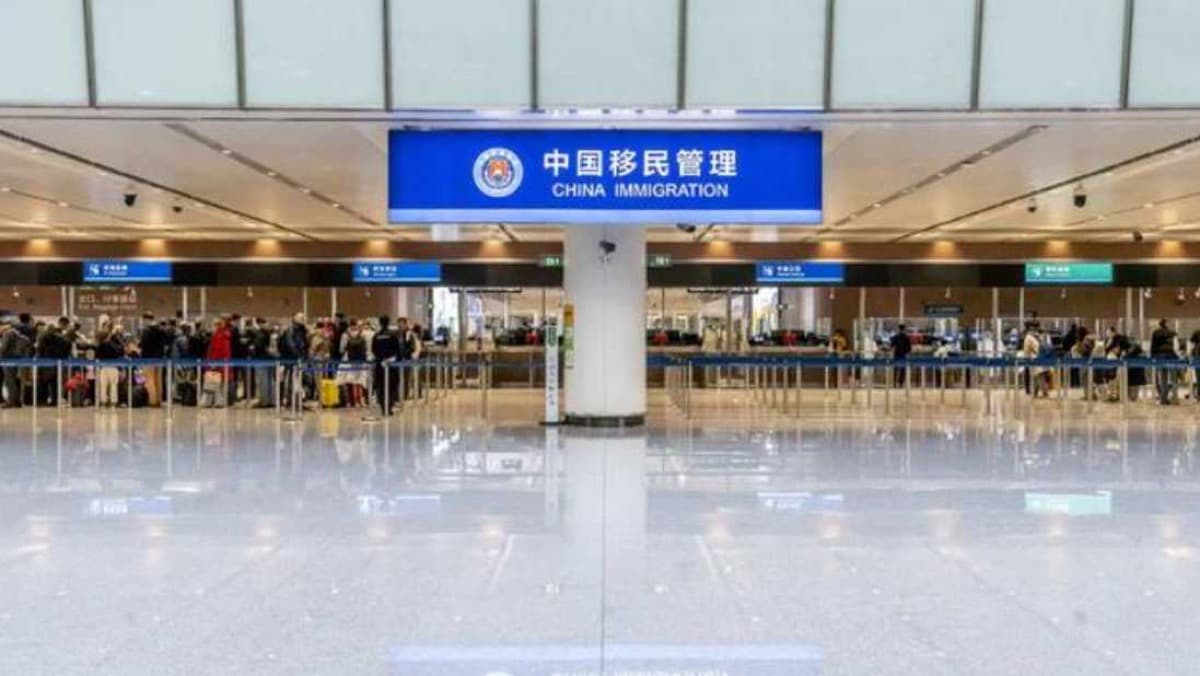
To clear immigration you need entry permission: a valid Chinese visa, visa-free entry (China currently allows 30-day visa-free stays for ordinary passport holders of dozens of countries), or the 240-hour visa-free transit. Note that the transit policy only counts if you leave China for a third country or region within 240 hours — a purely international-to-domestic itinerary does not qualify on its own. For the full rules, see our guide "China's 240-Hour Visa-Free Transit: Rules, Eligibility & Border Walkthrough".
A boarding pass for an onward domestic flight is not enough to enter China. If you have no visa and no visa-free eligibility, the airline will deny boarding at your departure airport.
The Four Transfer Scenarios
Every international-to-domestic transfer in China falls into one of four scenarios. Which one you're in determines the whole process.
| Scenario | Collect and recheck bags? | Minimum connection time | Difficulty |
|---|---|---|---|
| One ticket, same airport | Depends on the airline | 2 hours | Easiest |
| Separate tickets, same airport | Always | 3–4 hours | Moderate |
| One ticket, different airports | Always | 5–6 hours | Complex |
| Separate tickets, different airports | Always | 6+ hours | Most complex |
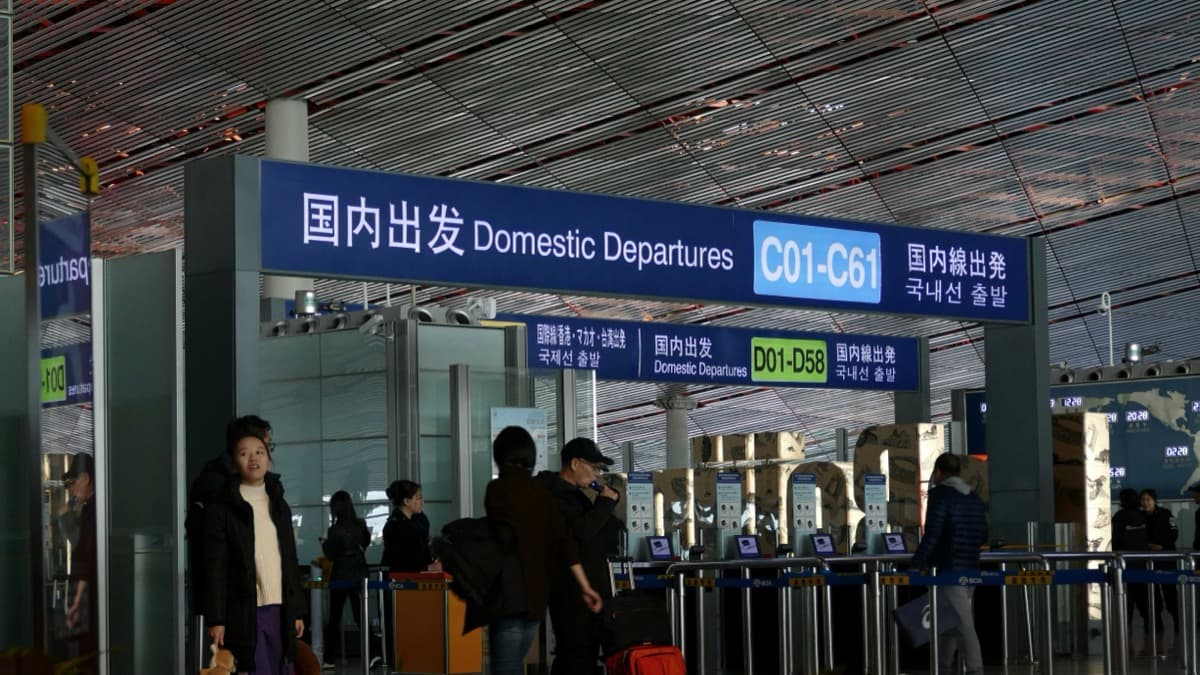
Do You Need to Collect and Recheck Your Bags?
In most cases, yes. Chinese customs requires checked baggage to be inspected at the point of entry, so the default is: collect your bags at the first airport, walk them through customs, and recheck them for the domestic leg.
The exceptions:
- Same airline or same alliance, one ticket. If your international and domestic flights are on the same ticket with the same airline group (for example Air China international + Air China domestic), bags are often checked through to the final destination. Confirm at check-in at your origin airport — and read the bag tag: the three-letter code on it should be your final destination.
- Guangzhou Baiyun (CAN) with China Southern. China Southern runs a "one ticket to destination" service at its Guangzhou hub: through-ticketed passengers get their bags checked through and skip baggage claim. After clearing border entry, stop at the China Southern transfer counter so staff can reconfirm customs clearance for your checked bags.
Even when bags are checked through, you personally still clear immigration and customs at the first airport.
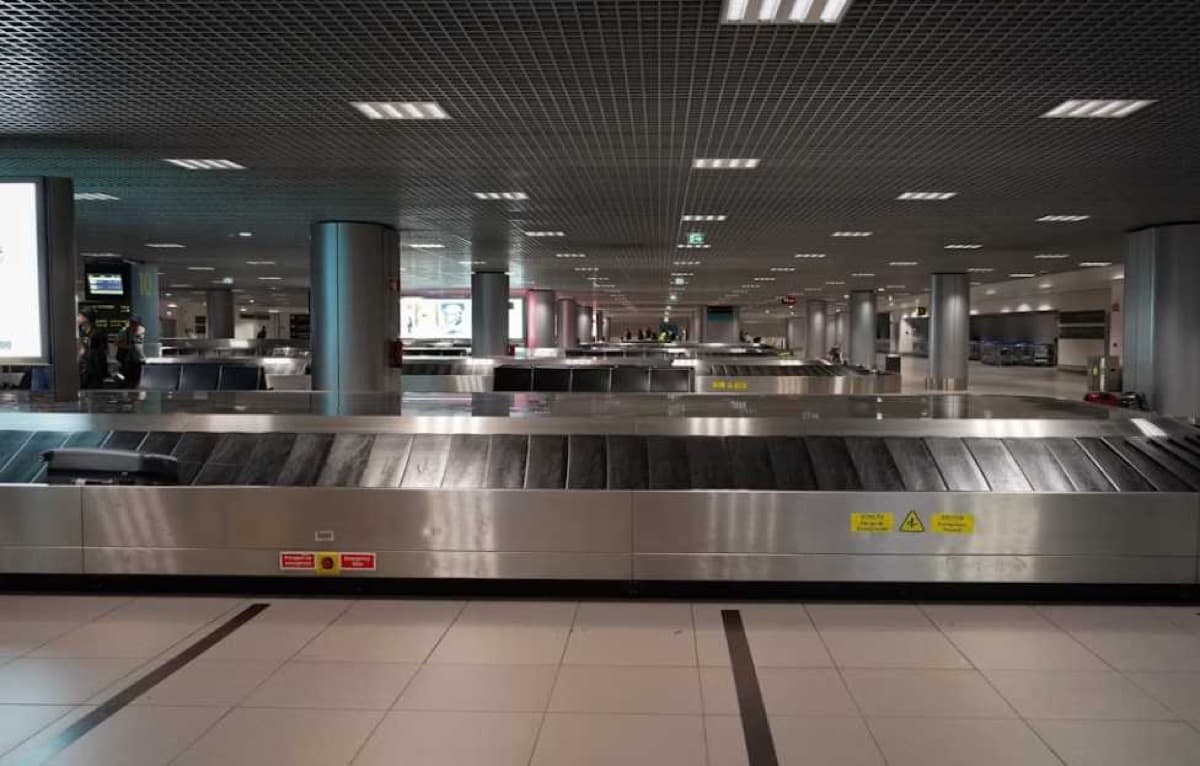
When in doubt, plan to collect and recheck. An extra 45 minutes at the airport beats a missed connection.
Step by Step: One Ticket, Same Airport
The easiest scenario — for example Paris → Shanghai Pudong → Xi'an on a single ticket.
1. Follow "Arrivals" signs to immigration
At peak times (mornings, holidays) the queue for foreign passports can take 30–90 minutes.
2. Clear immigration
Present your passport and visa or visa-free eligibility. The officer stamps or stickers your entry.
3. Collect your bags
Skip this only if your airline confirmed through-checked baggage at your origin. Otherwise wait at international baggage claim.
4. Clear customs
Walk through the green channel if you have nothing to declare.
5. Follow "Domestic Transfer" (国内中转) signs
Major airports have a dedicated transfer desk or domestic check-in area near arrivals.
6. Recheck your bags
Show your onward boarding pass at the airline's transfer desk and drop your bags.
7. Clear domestic security
Faster than international security — typically 15–30 minutes.
8. Go to your domestic gate
Check the terminal and gate on the departure screens; large airports like Beijing Capital use multiple terminals.
Minimum connection time: 2 hours. Comfortable: 3 hours.
Step by Step: Separate Tickets, Same Airport
Common when the international and domestic flights were booked on different platforms. The key difference: after customs you exit to the public arrivals hall and check in again like a fresh passenger.
1. Clear immigration, collect bags, clear customs
Same as the one-ticket scenario — but with separate tickets you always collect your bags.
2. Exit to the public arrivals hall
You are now landside. The domestic departures area may be upstairs or in a connected terminal — follow the signs.
3. Check in for the domestic flight
Go to the domestic check-in counter with your passport and booking confirmation. Online check-in for Chinese domestic flights often requires a Chinese phone number, so budget time for the counter.
4. Drop your bags and clear domestic security
Then head to your gate.
Minimum connection time: 3 hours. Recommended: 4 hours.
Separate tickets mean no protection: if your international flight is delayed and you miss the domestic flight, you buy a new ticket. Allow extra buffer. If you book the domestic leg yourself, Ctrip / Trip.com sells Chinese domestic flights in English and shows terminals and airport codes clearly.

Changing Airports: Beijing and Shanghai
Only Beijing and Shanghai commonly force an airport change. Ground transport between airports is not included in your ticket — even on a single through ticket, you arrange and pay for it yourself.
Beijing: Capital (PEK) ↔ Daxing (PKX)
The two airports are roughly 70 km apart. Check your ticket carefully: "Beijing" can mean either airport, and the three-letter code (PEK or PKX) is the only reliable indicator.
| Option | Time | Cost |
|---|---|---|
| Taxi or ride-hailing | 90–120 minutes | ¥300–400 |
| Airport shuttle bus | 60–90 minutes | ~¥40 |
| Subway (multiple line changes) | ~2 hours | ~¥40 — not recommended with luggage |
Shanghai: Pudong (PVG) ↔ Hongqiao (SHA)
The two airports are about 45 km apart. The Airport Link Line, opened in December 2024, is now the fastest public option.
| Option | Time | Cost |
|---|---|---|
| Airport Link Line (PVG T1/T2 ↔ Hongqiao T2) | ~40 minutes | ¥26 — runs roughly 06:00–22:00, every ~15 minutes |
| Metro Line 2 (direct) | ~90 minutes | ¥8 |
| Taxi or ride-hailing | 60–90 minutes | ¥200–300 |
You can pay for the metro and the Airport Link Line with the transport QR code in Alipay. With heavy luggage, a taxi or a Didi ride is far less stressful than the subway — ask the driver for the airport by its code ("PKX", "SHA") to avoid mix-ups.


How Much Time to Allow
These are practical buffers, not official minimum connection times — airlines set their own.
| Scenario | Absolute minimum | Recommended |
|---|---|---|
| One ticket, same airport, same airline | 90 minutes | 3 hours |
| One ticket, same airport, different airlines | 2 hours | 4 hours |
| Separate tickets, same airport | 3 hours | 5 hours |
| Different airports (Beijing or Shanghai) | 5–6 hours | 8+ hours |
Add more time if you arrive during peak immigration hours (weekday mornings), during Chinese public holidays — Chinese New Year and Golden Week (around October 1–7) can double the queues — or if you are unfamiliar with the airport.
Practical Tips
- Confirm through-check at your origin airport. Ask the check-in agent directly and read the bag tag — the three-letter code should be your final destination.
- Follow "Domestic Transfer / 国内中转" signs after customs at major airports; the transfer desk is usually faster than going landside and checking in again.
- Screenshot your onward booking and bag tags in case of poor signal.
- Check the airport code on every ticket — PEK vs PKX in Beijing, PVG vs SHA in Shanghai. A wrong-airport mistake costs hours.
- Some airports split domestic flights across terminals (Beijing Capital T2/T3, Shanghai Pudong T1/T2 and satellite halls). Budget 15–30 extra minutes for inter-terminal shuttles.
- Immigration questions? Call 12367, the official China immigration hotline, which has English service.